Semi Trucks
Logistics
Lease & Maintenance
Buy Used Trucks

Updated October 19, 2026
Freight markets are constantly changing. Fluctuating transportation rates, shifting capacity, tighter carrier requirements, and rising customer expectations make it increasingly difficult for shippers to manage freight efficiently while controlling costs.
Whether you're moving full truckload (FTL), less-than-truckload (LTL), or specialized freight, finding the right carrier at the right time can be a challenge. That's where freight brokerage can help.
Freight brokerage connects shippers with qualified carriers to move goods efficiently, manage transportation costs, and respond to changing capacity needs. By combining carrier networks, transportation expertise, and technology, freight brokers help businesses simplify shipping operations and maintain greater visibility into their freight.
Here are seven key benefits of working with a freight brokerage provider in 2026.
Freight brokerage is a transportation service that connects businesses needing to ship goods with motor carriers that have the equipment and capacity to transport them.
A freight broker acts as an intermediary between the shipper and carrier, coordinating transportation arrangements without typically operating the trucks moving the freight.
Freight brokers manage several important aspects of the shipping process, including:
For shippers, this means access to transportation expertise and an established carrier network without having to manage every carrier relationship independently.
The primary benefits of freight brokerage include access to reliable carrier capacity, transportation cost management, operational flexibility, carrier risk mitigation, shipment visibility, time savings, and improved delivery performance.
Finding dependable carrier capacity is one of the biggest challenges in freight transportation, particularly during seasonal demand spikes, market disruptions, or periods of tightening capacity.
Freight brokers maintain relationships with carriers across different geographic regions, equipment types, and transportation modes. This network helps shippers identify available capacity without having to source and negotiate with individual carriers for every shipment.
An established freight brokerage provider can help businesses:
However, carrier network size alone doesn't determine reliability. The quality of the carriers and how they are evaluated are equally important.
Freight rates change based on supply and demand, fuel costs, shipping lanes, equipment availability, and other market conditions. Managing these fluctuations requires timely market intelligence and transportation expertise.
Freight brokers use carrier relationships, pricing data, and market knowledge to help shippers make more informed transportation decisions.
These capabilities can help businesses:
Advanced pricing analytics can also help anticipate market trends and identify potential cost pressures before they affect transportation budgets.
While no freight broker can eliminate market volatility, the right provider can help shippers manage their exposure and make better decisions as conditions change.
Transportation needs rarely remain constant throughout the year. Seasonal demand, new customers, product launches, and unexpected disruptions can quickly change shipping volumes and capacity requirements.
Freight brokerage provides flexible access to transportation capacity without requiring businesses to expand their own fleets or establish new carrier contracts every time demand changes.
For example, a retailer experiencing a surge in orders during peak season may need additional truckload capacity for several weeks. A freight broker can help source carriers to support the increase and adjust capacity as demand returns to normal.
This flexibility also supports businesses that need to move between different transportation modes, including FTL, LTL, expedited, intermodal, and specialized freight.
Freight brokerage can also complement dedicated transportation or managed transportation programs by providing supplemental capacity when needed.
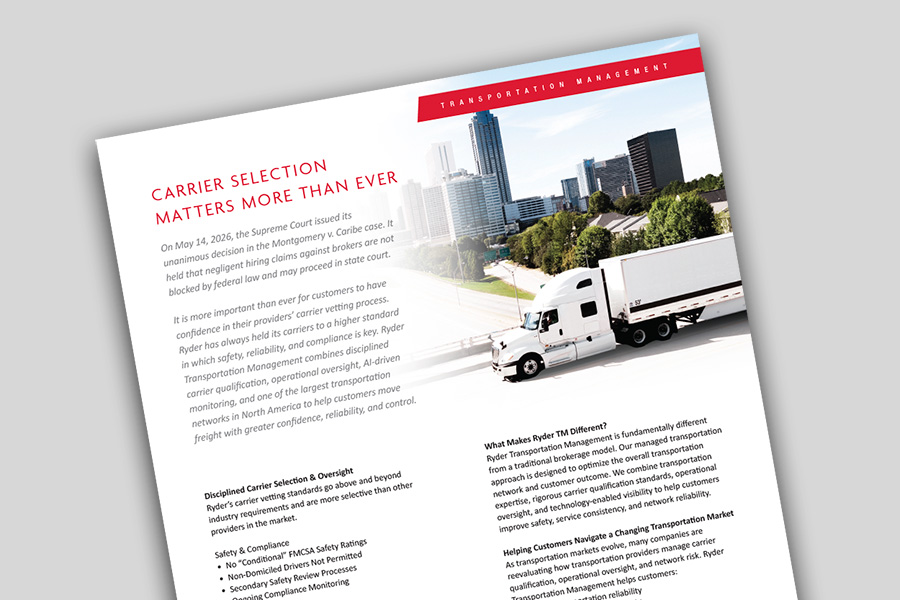
Carrier selection has become an increasingly important consideration for shippers. Safety performance, insurance coverage, operating authority, carrier identity, and fraud prevention all play a role in transportation risk management.
Working with a freight brokerage provider that maintains rigorous carrier qualification standards can help businesses reduce exposure to unreliable or potentially unsafe carriers.
A comprehensive carrier vetting process should evaluate:
Carrier vetting should not stop once a carrier enters the network. Continuous monitoring and periodic reassessment help identify changes that could affect safety, compliance, or service reliability.
For shippers, the benefit is more than finding an available truck. It's gaining confidence that transportation decisions are supported by disciplined carrier selection and ongoing oversight.
Knowing where freight is located and whether it will arrive on time is essential to effective supply chain management.
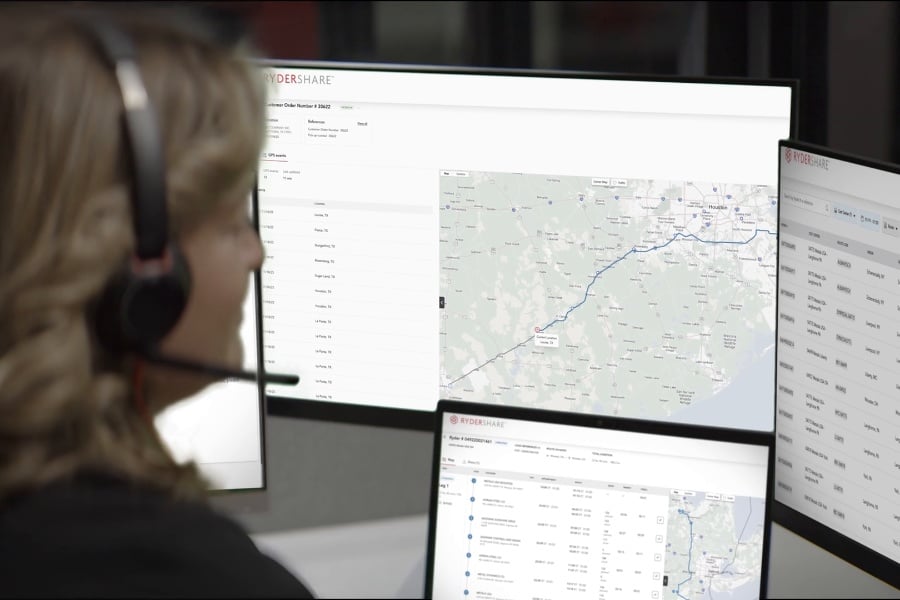
Modern freight brokerage providers use transportation technology to improve shipment tracking, communication, and exception management.
Depending on the provider's technology capabilities, shippers can gain access to:
This visibility helps transportation teams identify potential problems earlier, communicate with customers, and make informed decisions when shipments don't go according to plan.
Instead of relying on phone calls and emails for every update, shippers can use centralized information to maintain a clearer picture of freight movement.
Managing freight internally involves much more than booking a truck. Transportation teams must source carriers, negotiate rates, schedule pickups, monitor shipments, coordinate documentation, and resolve unexpected issues.
These activities require time, resources, and specialized expertise.
A freight brokerage provider can handle many of these responsibilities, helping shippers reduce administrative work and focus on core business operations.
Freight brokers can support:
For businesses with limited transportation resources, outsourcing these activities can improve efficiency without the need to expand internal teams.
Delivery performance directly affects customer satisfaction, inventory availability, and business relationships.
When shipments are delayed, businesses may face production interruptions, missed appointments, additional costs, or dissatisfied customers.
Freight brokers help support dependable delivery performance by matching shipments with qualified carriers, coordinating transportation schedules, and monitoring freight movement.
If disruptions occur, an experienced broker can work with carriers to identify alternatives, communicate updates, and help minimize the impact.
Although no provider can guarantee every shipment will arrive on time, strong carrier relationships, proactive communication, and shipment visibility can help improve transportation reliability and the customer experience.
Technology plays an increasingly important role in how freight brokers source capacity, manage shipments, and support transportation decisions.
Modern freight brokerage platforms can combine digital freight matching, predictive analytics, real-time tracking, and automated workflows to help transportation teams work more efficiently.
Three important capabilities include:
Digital freight matching: Technology helps identify carriers based on equipment availability, preferred lanes, location, and shipment requirements. This can reduce manual sourcing time and improve carrier utilization.
Predictive analytics and market intelligence: Freight data and analytical tools help brokers evaluate pricing trends, anticipate capacity changes, and make more informed transportation decisions.
Real-time visibility and exception management: Connected transportation systems provide shipment updates and help identify delays or service disruptions so transportation teams can respond more quickly.
Technology is most effective when combined with experienced transportation professionals who understand market conditions, carrier relationships, and the specific needs of each shipment.
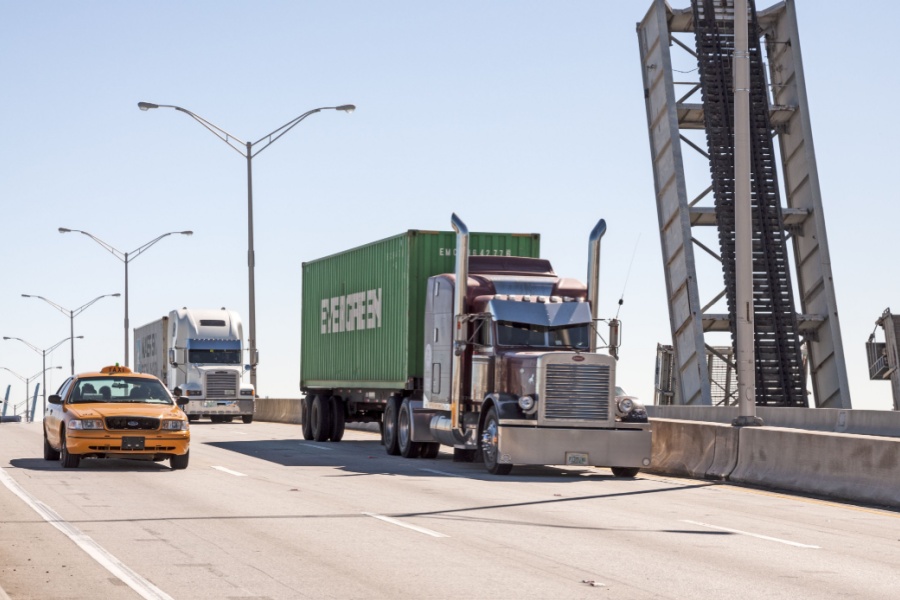
Freight brokerage supports multiple shipping modes and equipment types, allowing businesses to select transportation options based on shipment size, urgency, destination, and handling requirements.
|
Freight Type |
Best Used For |
|
Full Truckload (FTL) |
Large shipments requiring an entire truck or trailer |
|
Less-than-Truckload (LTL) |
Smaller shipments that share trailer space with other freight |
|
Expedited Freight |
Time-sensitive shipments with urgent delivery requirements |
|
Intermodal |
Longer-distance freight using a combination of rail and truck transportation |
|
Flatbed |
Oversized, heavy, or irregularly shaped freight |
|
Refrigerated Freight |
Temperature-sensitive products requiring controlled transportation |
|
Drayage |
Short-distance container movements between ports, rail terminals, and other facilities |
|
Cross-Border Freight |
Shipments moving between the United States, Mexico, and Canada |
The availability of each option depends on the freight broker's capabilities and carrier network.
Not all freight brokerage providers offer the same level of service, technology, or carrier oversight.
When evaluating a freight broker, shippers should consider five important factors:
1. Carrier network and qualification standards: Does the provider maintain a broad network of qualified carriers with established safety, compliance, and performance requirements?
2. Transportation expertise: Does the broker understand your industry, shipping lanes, freight requirements, and transportation challenges?
3. Technology and visibility: Can you track shipments, access performance information, and receive timely updates when disruptions occur?
4. Flexibility and service capabilities: Can the provider support changing freight volumes, specialized equipment, and multiple transportation modes?
5. Communication and support: Does the broker provide responsive support and clear accountability when transportation challenges arise?
The right provider should do more than secure capacity. It should help your business manage transportation costs, reduce risk, improve visibility, and respond to changing supply chain demands.
Ryder combines transportation expertise, technology, and an extensive carrier network to help businesses manage freight more efficiently across North America.
With access to superior vetted carriers, Ryder Freight Brokerage Solutions provide flexible capacity across multiple transportation modes, supported by real-time visibility and experienced logistics professionals.
Ryder's freight brokerage capabilities help businesses:
Freight brokerage is also part of Ryder's broader transportation logistics portfolio, which includes transportation management and dedicated transportation solutions. This allows businesses to evaluate a combination of services based on their transportation needs.
Whether you need additional capacity for a single shipment or ongoing freight brokerage support, Ryder can help you build a more flexible and reliable transportation strategy.
Learn more about Ryder Freight Brokerage Solutions.
A freight broker connects shippers with qualified carriers that transport their goods. Brokers coordinate carrier sourcing, pricing, scheduling, shipment tracking, and communication to help businesses manage freight efficiently.
Freight brokerage can help shippers control costs through competitive carrier sourcing, rate negotiations, transportation mode selection, and reduced administrative work. Actual savings depend on shipment characteristics, market conditions, and the broker's capabilities.
Freight brokerage primarily focuses on connecting shipments with carrier capacity and coordinating freight movements. Transportation management takes a broader approach, including transportation planning, carrier procurement, network optimization, freight execution, performance management, and financial settlement.
Freight brokers can evaluate carrier operating authority, insurance coverage, safety records, identity, and service performance before assigning shipments. Strong carrier qualification programs also include ongoing monitoring to identify changes in risk or compliance.
Full truckload (FTL) freight uses an entire truck or trailer for a shipment, while less-than-truckload (LTL) combines smaller shipments from multiple customers in shared trailer space. FTL generally offers more direct transportation, while LTL can be more economical for smaller shipments.
Yes. Freight brokerage provides access to additional carrier capacity during seasonal peaks, promotional periods, or unexpected increases in freight volume. This helps businesses adjust transportation resources without permanently expanding their fleets.
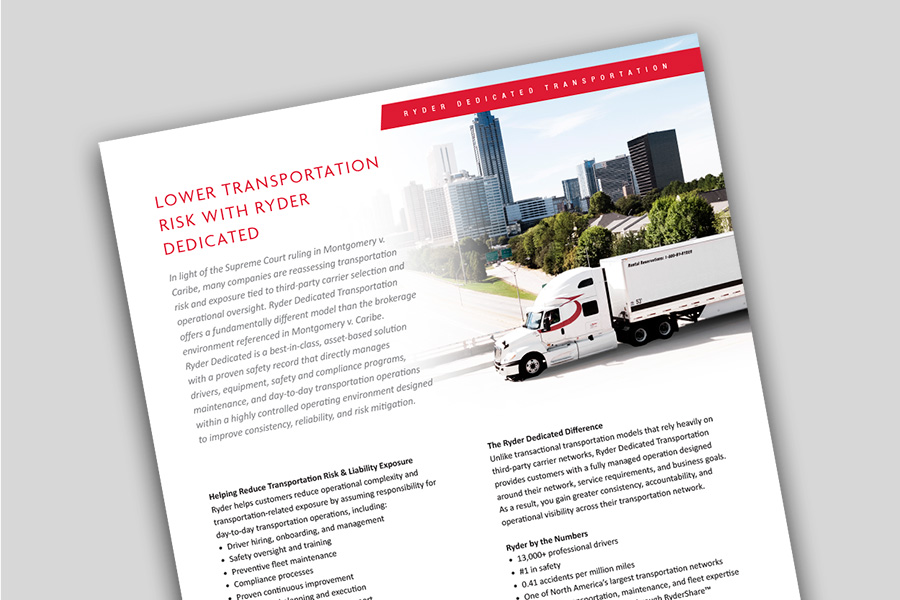
Yes. Freight brokerage can provide supplemental capacity for businesses using dedicated transportation. This blended approach can help accommodate demand spikes, irregular freight lanes, and shipments that fall outside regular dedicated fleet operations.