Logistics
Warehousing & Fulfillment
Transportation
E-commerce
E-commerce Fulfillment Services
Lease & Maintenance
Semi Trucks
Supply Chain Technology
Fleet Management Technology
Logistics
E-commerce
Lease & Maintenance
Buy Used Trucks
Updated November 20, 2026
Direct-to-consumer (D2C) fulfillment gives brands greater control over how they sell products, engage customers, and manage the shopping experience. But as online sales grow and customer expectations evolve, fulfilling orders efficiently has become increasingly complex.
Today's consumers expect fast, affordable shipping, accurate orders, real-time tracking, and convenient returns. At the same time, brands must manage rising fulfillment costs, fluctuating demand, inventory availability, and growing competition across digital channels.
According to the U.S. Census Bureau, U.S. retail e-commerce sales reached $340.2 billion in the second quarter of 2026, an increase of 12.2% year over year. E-commerce accounted for 17.1% of total retail sales.
For D2C brands, the opportunity is significant. However, turning online sales into profitable, repeatable growth requires more than a strong product and digital storefront. It requires a fulfillment strategy that can scale with demand while maintaining service and controlling costs.
In this article, we'll explore how D2C fulfillment works, its advantages and disadvantages, and how brands can build a more efficient fulfillment operation.
Direct-to-consumer (D2C) e-commerce is a business model in which brands sell products directly to consumers through their own websites, mobile apps, or other digital channels rather than relying exclusively on retailers, wholesalers, or distributors.
By selling directly, brands can control pricing, marketing, customer relationships, and the overall shopping experience. They also gain access to customer data that can help inform product development, inventory planning, and marketing decisions.
Unlike traditional retail distribution, where products typically move through intermediaries before reaching customers, D2C brands manage the relationship from the initial purchase through delivery and returns.
However, many businesses now combine D2C selling with marketplaces, wholesale distribution, and physical retail locations. This omnichannel approach creates additional opportunities to reach consumers but requires greater coordination across inventory and fulfillment operations.
Direct-to-consumer fulfillment is the process of receiving, storing, picking, packing, shipping, and managing returns for orders placed directly with a brand.
Unlike traditional business-to-business (B2B) distribution, which often involves shipping larger quantities to retailers or distribution centers, D2C fulfillment typically handles individual customer orders shipped directly to homes or other designated delivery locations.
D2C brands can manage fulfillment internally, use dropshipping arrangements, or outsource operations to a third-party logistics (3PL) provider.
An effective D2C fulfillment strategy helps brands maintain inventory accuracy, reduce shipping costs, meet delivery expectations, and create a consistent customer experience.
The D2C fulfillment process includes five primary steps:
Products arrive at a fulfillment center, where they are received, inspected, recorded, and stored. Accurate inventory management ensures products are available for purchase and ready to ship when customers place orders.
When a customer completes a purchase, the order is transmitted from the e-commerce platform to a warehouse management system (WMS). Integrated technology helps verify inventory availability, prioritize orders, and initiate fulfillment workflows.
Warehouse teams or automated systems locate the ordered products, pick the correct quantities, and prepare them for shipping. Packaging may include branded materials, promotional inserts, or customized configurations that enhance the customer experience.
Completed orders are assigned to parcel carriers based on factors such as destination, service requirements, delivery speed, and cost. A distributed fulfillment network can position inventory closer to customers, helping reduce shipping distances and improve delivery performance.
When customers return or exchange products, the fulfillment operation must receive, inspect, process, and determine whether items can be returned to available inventory. Efficient reverse logistics helps protect product value, control costs, and maintain customer satisfaction.
Together, these processes determine how effectively a brand can deliver on its promises to customers.
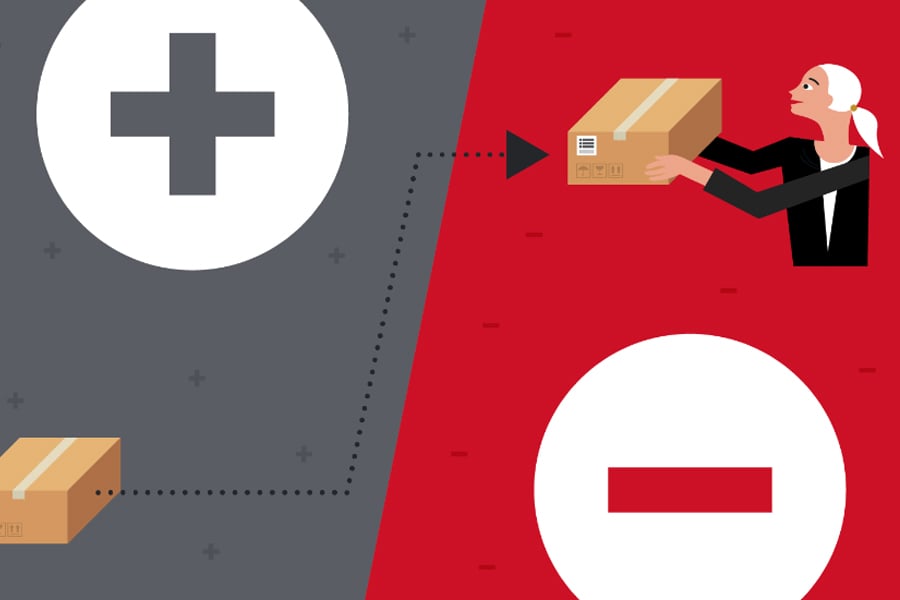
D2C fulfillment offers greater control over customer relationships and potentially stronger profit margins. However, brands must also manage the costs and operational responsibilities associated with inventory, warehousing, shipping, and returns.
| Advantages | Challenges |
| Greater control over the customer experience | Increased operational complexity |
| Direct access to customer data | Higher customer acquisition costs |
| Potential for stronger profit margins | Risisng fulfillment and shipping expenses |
| Flexibility in branding and packaging | Difficulty scaling during demand spikes |
| Faster response to customer preferences | Greater responsability for inventory and returns |
Understanding these trade-offs helps brands determine whether to manage fulfillment internally or work with an experienced 3PL provider.
D2C e-commerce allows brands to reach customers without investing in an extensive physical retail network. E-commerce platforms make it possible to launch digital storefronts, manage transactions, and begin selling products with relatively limited upfront infrastructure.
This flexibility allows emerging brands to test products, reach new audiences, and expand their businesses without the costs associated with opening additional retail locations.
Launching an online store may be relatively straightforward, but scaling fulfillment is another matter.
As order volumes increase, brands need additional warehouse space, labor, inventory management capabilities, and shipping capacity. Promotional events, seasonal demand, and unexpected sales spikes can quickly overwhelm an operation designed for smaller volumes.
Without scalable fulfillment infrastructure, brands risk delayed shipments, inaccurate orders, and dissatisfied customers.
Working with a 3PL company can provide access to established fulfillment centers, technology, automation, and flexible resources without requiring brands to build and manage every capability themselves.
D2C brands control how customers interact with their products, from the first website visit through delivery and post-purchase support.
This allows businesses to create consistent messaging, personalized experiences, branded packaging, and direct communication with shoppers.
The opportunity extends beyond marketing. Order accuracy, delivery speed, tracking visibility, and convenient returns all influence how consumers perceive a brand.
Ryder's 2026 E-commerce Consumer Study found that 76% of shoppers consider fast shipping more important than selecting a specific delivery date. These findings reinforce the importance of dependable fulfillment in building customer loyalty.
D2C brands compete not only on product quality and price but also on convenience, availability, and delivery performance.
Consumers can compare products across multiple websites and marketplaces, making it easier to switch brands when expectations aren't met.
At the same time, shipping costs, return policies, and fulfillment reliability can influence purchasing decisions.
To remain competitive, brands need accurate inventory visibility, efficient order processing, flexible delivery options, and a consistent post-purchase experience.
By selling directly to consumers, brands can reduce their dependence on traditional retail intermediaries and retain more revenue from each sale.
They also gain greater control over pricing strategies, promotional offers, and product assortments.
These advantages can create opportunities to reinvest in customer acquisition, product development, and operational improvements.
Eliminating retail intermediaries doesn't eliminate the cost of getting products into customers' hands.
D2C brands must account for inventory storage, warehouse labor, packaging materials, parcel shipping, technology, and returns processing.
As order volumes grow, these expenses can become increasingly difficult to manage, particularly when customers expect fast or free shipping.
Brands need to evaluate their total cost per order rather than focusing solely on sales growth.
Strategies such as distributing inventory across multiple fulfillment locations, optimizing packaging, improving inventory accuracy, and using technology-driven carrier selection can help reduce costs while maintaining service levels.
D2C brands have direct access to information about purchasing behavior, product preferences, order frequency, and customer engagement.
These insights can support more accurate demand forecasting, targeted promotions, and better inventory planning.
For example, identifying regional purchasing trends can help brands determine where to position inventory to reduce shipping distances and improve delivery performance.
As brands expand beyond their own websites into marketplaces, wholesale distribution, and physical retail, inventory management becomes more complicated.
Disconnected systems can create inventory discrepancies, overselling, stockouts, and fulfillment delays.
An integrated warehouse management system helps provide visibility into inventory availability and order activity across fulfillment locations and sales channels.
For brands pursuing an omnichannel strategy, this connectivity is essential to maintaining a consistent customer experience.
D2C brands can respond quickly to changing consumer preferences, introduce new products, test promotions, and customize the shopping experience.
They can also experiment with subscription programs, product bundles, personalized packaging, and other value-added services that encourage repeat purchases.
Every new product, sales channel, or promotional initiative adds complexity to fulfillment operations.
Brands must coordinate inventory replenishment, warehouse workflows, order processing, shipping, returns, and customer service.
Managing these activities internally can divert resources from product innovation, marketing, and business development.
Automation, integrated technology, and experienced fulfillment partners can help brands improve efficiency while maintaining the flexibility to respond to changing demand.
Outsourcing D2C fulfillment to a third-party logistics provider can help brands manage growth without investing heavily in additional warehouses, technology, labor, and transportation infrastructure.
A 3PL company manages some or all of the fulfillment process on behalf of a brand, allowing internal teams to focus on product development, marketing, and customer relationships.
Outsourcing may be especially valuable when a brand experiences:
However, outsourcing isn't automatically the best option for every business. Brands should evaluate their order volumes, product characteristics, service requirements, integration needs, and total fulfillment costs before selecting a partner.
Improving D2C fulfillment requires a coordinated approach to inventory, technology, warehouse operations, and transportation.
Distribute inventory strategically. Positioning products closer to customers through regional fulfillment centers can reduce shipping distances, improve delivery speed, and help control parcel costs.
Improve inventory visibility. Integrated technology provides more accurate information about inventory availability, order status, and fulfillment performance, helping brands reduce stockouts and prevent overselling.
Use warehouse automation. Automated picking, sorting, and material handling technologies can improve productivity, increase accuracy, and support higher order volumes.
Optimize shipping decisions. Evaluating carriers, service levels, shipping zones, and delivery requirements helps brands balance transportation costs with customer expectations.
Streamline returns management. Efficient reverse logistics processes help brands inspect, process, and return eligible merchandise to available inventory more quickly.
Build flexibility into fulfillment operations. Scalable warehousing, labor, and technology resources help brands respond to seasonal peaks, promotions, and changing demand without compromising service.
D2C refers to brands selling directly to consumers without traditional retail intermediaries. B2C is a broader term describing any business selling to consumers, including retailers and marketplaces. Both may involve shipping individual orders directly to customers, but D2C brands typically maintain greater control over the customer relationship.
D2C fulfillment typically involves processing and shipping individual orders directly to consumers. Traditional retail fulfillment often involves moving larger quantities of inventory to stores, wholesalers, or distribution centers. Businesses operating across both models may benefit from an integrated omnichannel fulfillment strategy.
Common challenges include managing inventory accuracy, controlling shipping costs, scaling warehouse operations, processing returns, and meeting customer expectations for fast, reliable delivery.
Outsourcing can be cost-effective when a 3PL provider helps reduce infrastructure expenses, improve warehouse efficiency, optimize transportation, and support fluctuating order volumes. The financial benefits depend on a brand's order profile, product requirements, service expectations, and fulfillment costs.
Warehouse management systems, automation, and analytics help brands track inventory, process orders, improve picking accuracy, optimize shipping decisions, and monitor fulfillment performance. Integrated technology also supports more informed decisions as order volumes and sales channels expand.
D2C e-commerce gives brands more opportunities to connect directly with consumers, strengthen customer relationships, and grow their businesses. But success depends on having fulfillment operations that can keep pace with demand.
Ryder helps e-commerce brands manage these challenges with technology-driven fulfillment solutions, strategically located fulfillment centers, warehouse automation, inventory management, shipping optimization, and returns management.
Powered by RyderShip™, Ryder's e-commerce fulfillment platform, brands gain real-time visibility into inventory and orders, along with the technology and operational support needed to improve accuracy, streamline fulfillment, and scale efficiently.
Whether you're expanding into new markets, managing seasonal demand, or looking to improve fulfillment performance, Ryder can help you build a more responsive and cost-effective operation.
Explore Ryder's e-commerce fulfillment solutions and discover how the right 3PL partner can help your brand grow.