Logistics
Warehousing & Fulfillment
Transportation
E-commerce
E-commerce Fulfillment Services
Lease & Maintenance
Semi Trucks
Supply Chain Technology
Fleet Management Technology
Logistics
E-commerce
Lease & Maintenance
Buy Used Trucks

Updated June 12, 2026
Key Takeaways
The transportation market entering the second half of 2026 looks different than it did at the beginning of the year.
Spot truckload rates have moved above contract rates for the first time since 2021, tender rejection rates have climbed to multi-year highs, and carrier exits remain elevated as smaller operators continue to struggle with inflation, fuel costs, and profitability challenges.
At the same time, economic uncertainty remains. Inflationary pressures continue to impact transportation costs, tariff policy remains fluid, and transportation leaders are evaluating the implications of the Supreme Court's Montgomery v. Caribe ruling.
For shippers, the remainder of 2026 will require balancing cost control with capacity security, service reliability, and risk management. Understanding where the freight market is heading—and which transportation strategies are best positioned for changing market conditions—will be critical.
For much of the past two years, excess truckload capacity kept rates low and gave shippers significant leverage during transportation procurement cycles.
According to the June State of Transportation report compiled by FreightWaves on behalf of Ryder (linked at the end of this article), several key indicators are showing some change over the past few months:
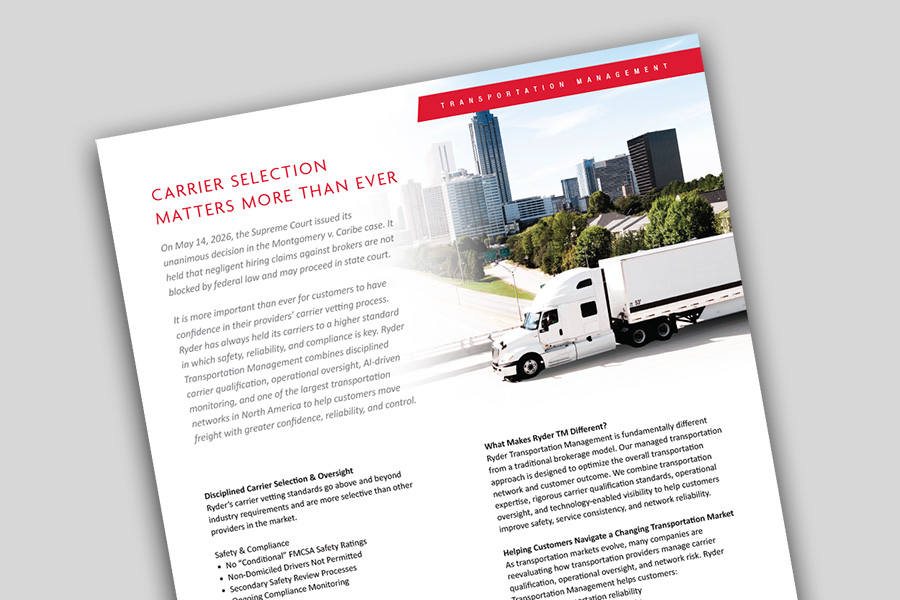
On May 14, 2026, the Supreme Court issued its unanimous decision in the Montgomery v. Caribe case. It held that negligent hiring claims against brokers are not blocked by federal law and may proceed in state court. The decision is expected to increase scrutiny around carrier qualification, monitoring, and documentation across the transportation industry.
For shippers, the ruling reinforces the importance of understanding how transportation providers select and manage carrier networks. Transportation management providers and brokers with robust carrier qualification programs, ongoing monitoring, safety requirements, and documented vetting processes will be better positioned to navigate the evolving risk environment.
Transportation management is becoming increasingly strategic.
The role of transportation management has expanded beyond securing capacity and negotiating rates. Today's transportation management providers are expected to provide carrier oversight, network optimization, real-time visibility, procurement expertise, and risk management.
The strongest transportation management providers are helping shippers navigate:
With the volatility of market conditions, disciplined carrier procurement and ongoing carrier performance management will become increasingly important competitive advantages.
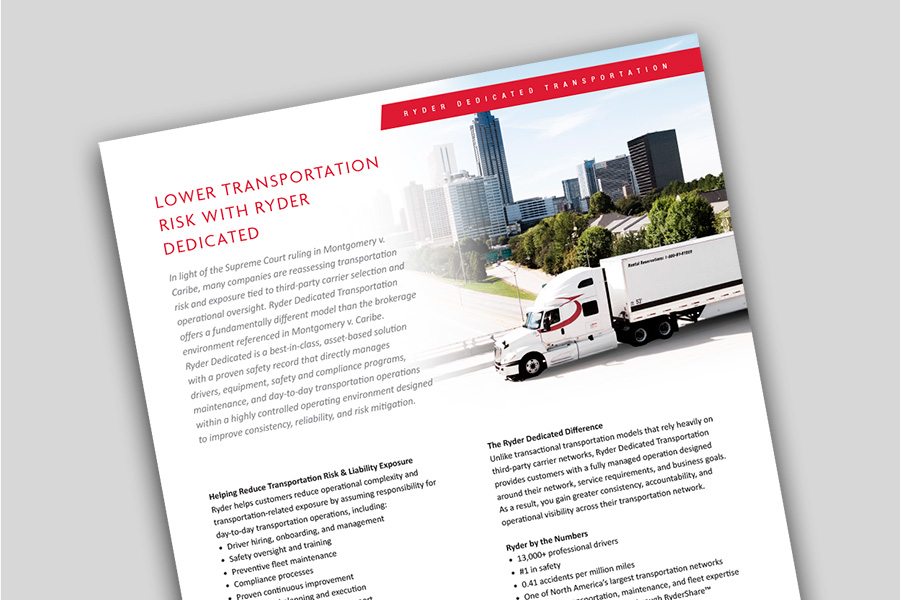
Dedicated transportation is expected to remain one of the strongest-performing segments of the transportation market through the remainder of 2026.
Many shippers are reassessing the tradeoffs between relying exclusively on the open market versus securing long-term capacity through dedicated operations.
Dedicated transportation offers several advantages in a tightening market:
Companies operating private fleets are also facing continued challenges related to driver recruitment, equipment costs, insurance expenses, and compliance requirements. As a result, many organizations are evaluating dedicated transportation models that provide the benefits of a private fleet without the operational burden.
LTL rates increased during the first half of the year, and carriers are expected to pursue additional rate increases in future bid cycles. Freight density, shipment consolidation trends, and tightening truckload capacity are all contributing to a more favorable pricing environment for LTL carriers.
As truckload capacity tightens, some shippers may shift freight into LTL networks to secure capacity, further supporting pricing momentum.
For shippers, transportation planning, shipment consolidation strategies, and network optimization will become increasingly important for managing LTL costs.
The remainder of 2026 is likely to require a different transportation strategy than the one many companies have been using.
Shippers should consider:
As capacity exits continue and demand improves, transportation procurement strategies that worked during the last year to 18 months may become less effective.
The Montgomery v. Caribe decision highlights the importance of understanding carrier selection standards and transportation provider oversight processes.
Truckload, LTL, intermodal, dedicated transportation, and transportation management each play important roles in building a resilient transportation network.
While rate increases are unlikely to be immediate across all modes, most indicators point toward a more inflationary transportation market in the second half of the year.
Shippers should evaluate transportation options based on their specific business objectives rather than relying on a one-size-fits-all approach. The right strategy often involves a combination of solutions designed to balance service, cost, flexibility, and risk.
Consider the following:
Best for companies that prioritize service consistency, capacity assurance, and operational control.
Best for organizations looking to optimize a complex transportation network.
Best for companies that need flexible capacity and market responsiveness.
Increasingly, leading shippers are moving away from relying on a single transportation mode. Instead, they are combining dedicated transportation, transportation management, brokerage, and LTL services to create a more agile transportation strategy.
The companies best positioned for the second half of 2026 will be those that can flex between modes, secure capacity when needed, optimize costs when market conditions change, and maintain visibility across their entire transportation network.
Ryder’s insights can help you do exactly that. You can stay up to date with the Ryder Monthly State of Transportation Report here.