Logistics
Warehousing & Fulfillment
Transportation
E-commerce
E-commerce Fulfillment Services
Lease & Maintenance
Semi Trucks
Supply Chain Technology
Fleet Management Technology
Logistics
E-commerce
Lease & Maintenance
Buy Used Trucks
Updated February 13, 2026
Freight markets don’t move in straight lines anymore.
Capacity tightens. Rates fluctuate. Demand spikes without warning. Weather events, labor shifts, and network disruptions ripple across supply chains faster than traditional planning cycles can keep up.
In today’s transportation landscape, reactive transportation strategies simply aren’t enough.
Dedicated transportation — when powered by real-time data, predictive analytics, and intelligent orchestration — has become a strategic advantage. It’s no longer just about having trucks with your name on them. It’s about building a transportation model that delivers predictability, visibility, resilience, and control in a volatile world.
Here are five reasons dedicated transportation matters more than ever in 2026 — and why technology is what makes it work.
For years, dedicated transportation, also referred to as dedicated contract carriage, has been valued for one core benefit: consistent capacity. When market capacity tightens, a dedicated fleet protects service levels.
But in 2026, predictability means more than just having trucks available. It means:
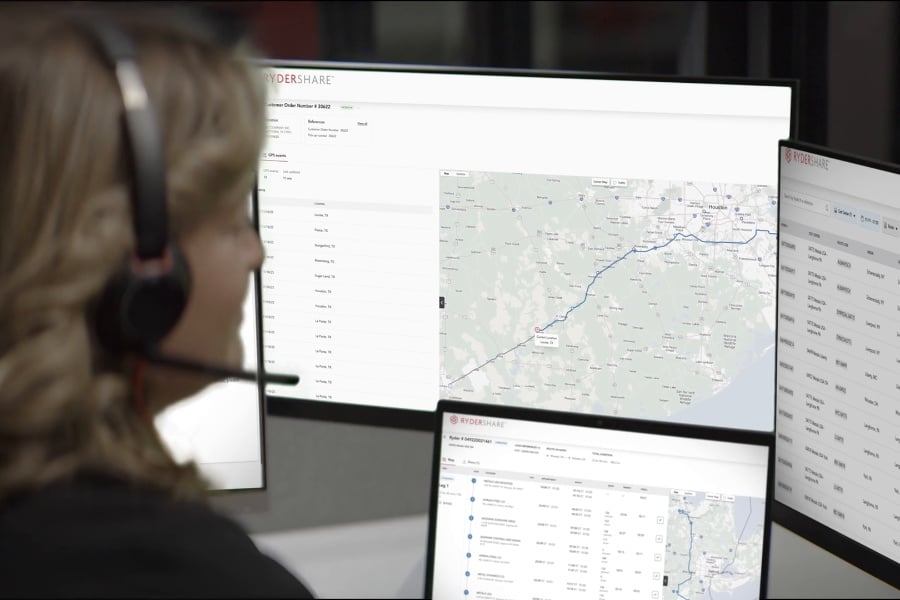
Modern dedicated fleets are supported by predictive analytics that monitor route performance, dwell time, utilization, and service reliability. Instead of waiting for issues to surface in a weekly report, transportation leaders can see patterns emerging in real time.
When data informs execution, predictability improves. And predictability is the foundation of resilient supply chains.
Traditional transportation visibility often stops at tracking — knowing where a shipment is.
But tracking alone doesn’t drive performance.
Today’s supply chains require connected visibility that integrates:
In a technology-powered dedicated model, transportation is not siloed. Data flows across fleet operations, warehouse activity, and transportation management systems. That connectivity enables proactive decision-making.
If a lane begins experiencing congestion, planners can adjust routing.
If dwell time increases at a specific facility, operational adjustments can be made.
If service risk appears on a core route, contingency plans can activate early.
Visibility becomes a control system — not just a dashboard.
Volatility isn’t temporary. It’s structural.
From capacity cycles to regulatory changes to unpredictable weather events, transportation networks must be designed to absorb shocks — not simply respond to them.
Dedicated transportation provides structural resilience through:
Technology amplifies that resilience.
Predictive models can flag risk trends before service failures occur. Scenario planning tools can test network changes before they’re implemented. Real-time alerts allow teams to intervene earlier — reducing cascading disruptions.
True resilience is anticipation plus execution. Dedicated transportation, supported by advanced analytics, enables both.
Efficiency used to mean minimizing empty miles and improving asset utilization.
Today, efficiency spans the entire transportation ecosystem:
Advanced analytics allow fleet performance to be continuously optimized rather than reviewed after the fact.
When transportation and warehouse data are aligned, outbound flows become smoother. When predictive maintenance insights are applied, downtime decreases. When performance metrics are continuously evaluated, service improves while cost stabilizes.
Dedicated fleets become dynamic systems — adapting as conditions shift instead of operating on static assumptions.
High-performing transportation networks in 2026 rarely rely on a single model.
The most resilient supply chains blend:
Dedicated transportation serves as the stable backbone of that network — delivering consistent performance where it matters most.
When combined with technology-enabled transportation management and real-time visibility platforms, dedicated fleets become part of a coordinated ecosystem rather than a standalone solution.
This integration enables shippers to:
Dedicated transportation is strongest when it operates as part of a technology-driven, integrated strategy.
The transportation decisions companies make today determine how well they navigate tomorrow’s volatility.
Dedicated transportation, supported by advanced analytics and real-time visibility, offers:
In a world where supply chains are increasingly complex and time-sensitive, dedicated fleets powered by intelligent systems provide a clear competitive advantage.
Transportation is no longer just about moving freight.
It’s about moving it predictably, intelligently, and with confidence — no matter what the market does next.
Learn how integrated, data-driven fleet solutions can help strengthen your transportation strategy in 2026 and beyond. Contact us.